
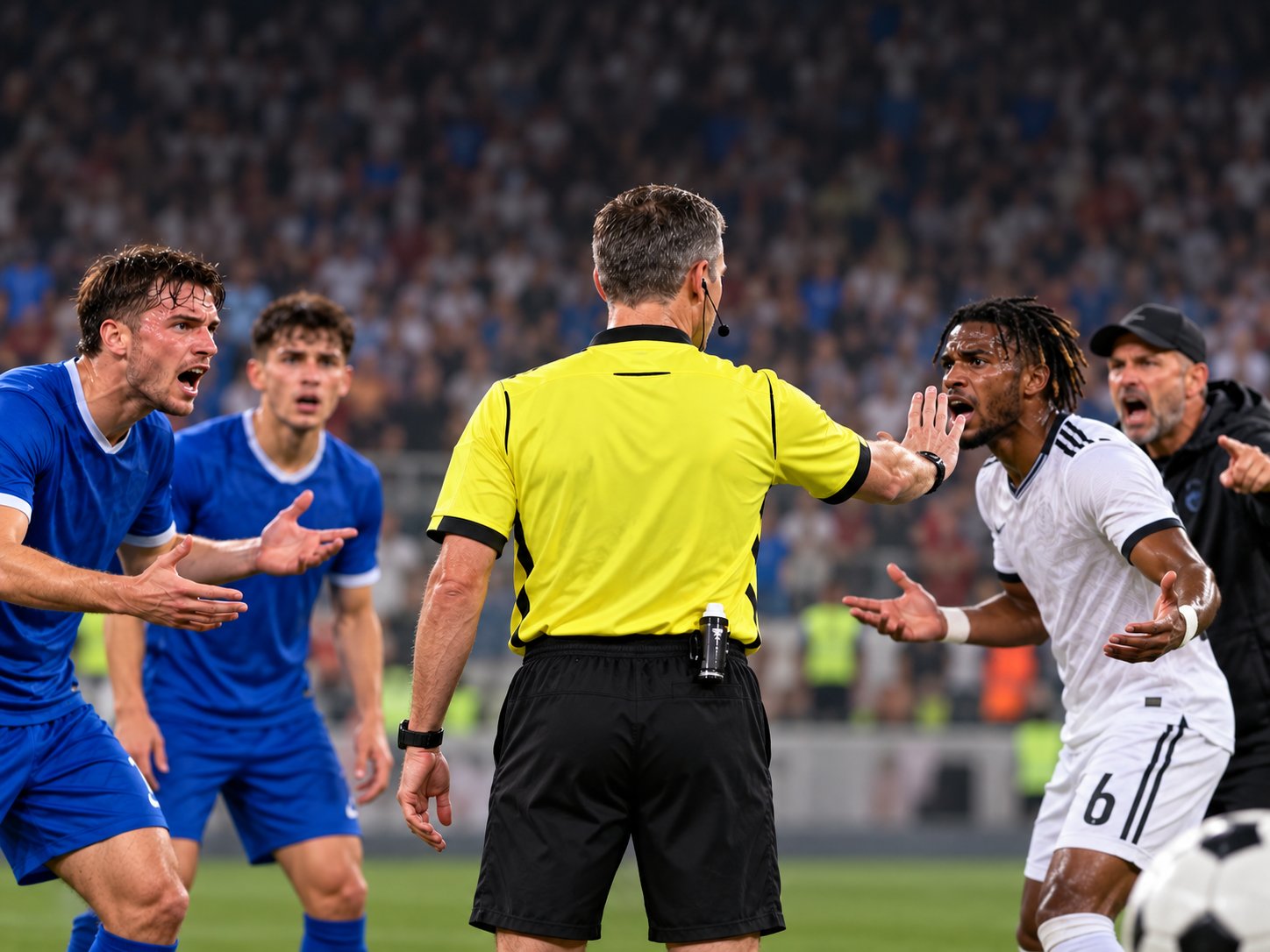
Over the many years I have been involved in soccer, whether playing, coaching, or running a club, I have witnessed countless disagreements between players, coaches, parents, and referees. Some are small, almost insignificant moments. A player questions a decision, a coach raises their hands in frustration, or a parent makes a comment from the sideline about a call they didn't agree with.
Most of the time, nothing comes of it. The referee makes the decision, the game continues, and everyone moves on.
But I have also seen those small disagreements turn into something much bigger. Players shout at referees, coaches argue from the sidelines, parents grow increasingly aggressive, and situations escalate to the point where yellow or red cards are issued, coaches are removed from the technical area, or spectators are asked to leave the field.
Sometimes those incidents even result in suspensions or bans from future games.
And every time I see it happen, I find myself asking the same question.
How did a disagreement over a soccer decision become more important than the game itself?
We Are Not Always Going to Agree
Let's start with something I think everyone can agree on. Referees are not perfect. They make mistakes. They miss fouls, misjudge offside decisions, award free kicks that perhaps shouldn't have been given, and sometimes miss things that seem obvious to everyone watching.
I have certainly disagreed with my fair share of decisions over the years. As a coach, I have watched a challenge, been convinced it was a foul, and then been frustrated when the referee allowed play to continue.
There have also been times when I have watched the game footage afterward and realized the referee was actually correct.
That is part of soccer.
We all see the game from different perspectives. A referee may be positioned differently from a coach standing on the sideline. A player involved in a challenge may believe they won the ball cleanly, while the referee sees contact that the player doesn't recognize.
The key thing to understand is that disagreeing with a decision isn't necessarily the problem. How we respond to that disagreement matters.
A brief expression of frustration is one thing. Continuing to argue, shouting abuse, questioning someone's integrity, or encouraging others to challenge the referee is something entirely different. And unfortunately, that distinction is sometimes lost in the emotion of a competitive game.
Becoming a Referee Takes More Effort Than People Realize
Something I think many players and parents overlook is the amount of work involved in becoming a referee. You don't simply turn up at a field, pick up a whistle, and start making decisions. Referees must learn the Laws of the Game, understand how those laws apply in real situations, complete required training and certification, and keep developing their knowledge and experience.
Depending on the governing organization and competition, that can involve online coursework, practical training, assessments, background screening, safeguarding requirements, and ongoing education.
And that is before they even step onto the field.
Once the game begins, the referee has to make decisions continuously, often within seconds. They are watching challenges, positioning, potential fouls, misconduct, player safety, substitutions, and the general flow of the game. At higher levels, they also need to work closely with assistant referees, maintain proper positioning, manage increasingly physical play, and make decisions that can significantly influence a match's outcome. All while players, coaches, and spectators watch and sometimes question everything they do. Think about that for a moment.
We expect referees to make immediate decisions, often without the benefit of replay, while everyone else has the luxury of watching from the sidelines and deciding what they think should have happened.
It is not an easy job, and I think we sometimes forget that.
The Problem Starts on the Sidelines
One of the things that concerns me most is how quickly frustration can spread from the sidelines onto the field. A coach questions a decision. A parent joins in. Another parent makes a comment. Before long, several people are shouting at the referee, and the players begin reacting in the same way. What started as one disputed decision becomes an unnecessary distraction for everyone involved. This is particularly concerning in youth soccer. Young players are still learning how to compete, manage their emotions, and respond when things don't go their way. They look to coaches and parents for examples of acceptable behavior.
- If a coach spends the entire game shouting at the referee, what message does that send to the players?
- If parents keep questioning every decision, why should we expect their children to respond differently?
We cannot expect young players to respect referees if the adults around them are demonstrating the opposite behavior.
As coaches, we have a responsibility to set that example. That doesn't mean we cannot ask a referee for clarification or raise a legitimate concern through the appropriate channels. It means understanding when to have that conversation, how to approach it, and when to move on. Sometimes the best thing a coach can do is simply tell their players to forget the decision and focus on the next play.
When Disagreement Becomes Disrespect
I think there is a significant difference between questioning a decision and challenging the referee's authority.
We have all seen players throw their hands up after a foul is called. We have seen coaches express frustration when a decision goes against their team. Those moments happen, and while we should manage them appropriately, they are often brief reactions to competitive situations.
The problem is when that frustration continues or escalates.
Players surround the referee demanding an explanation. Coaches repeatedly shout across the field. Parents make personal comments or accuse officials of deliberately favoring one team over another. Eventually, the referee may have little choice but to take disciplinary action.
Yellow cards are issued for dissent. Red cards can follow for more serious misconduct, including offensive, insulting, or abusive language or actions. Coaches and other team officials can also be disciplined, and spectators may be removed under competition or facility rules. What I find particularly frustrating is that these situations are often completely avoidable.
A player can disagree with a decision without earning a card. A coach can be frustrated without being removed from a game. A parent can support their child without shouting at the referee.
We need to stop treating emotional escalation as simply part of being passionate about soccer. Passion is wanting your team to succeed. Passion is encouraging your players, celebrating good performances, and helping them respond when things are difficult. Shouting abuse at a referee is not passion. It is a lack of respect and self-control.
We Are Losing Referees, and We Should Be Asking Why
Across soccer, recruiting and retaining referees remains a challenge, particularly at the grassroots level. Many reasons lead people to stop officiating. Work commitments, family responsibilities, physical demands, and changing interests all play a part. But abuse and negative experiences with players, coaches, and spectators are also significant concerns. And I think we need to consider what that means for the future of the game.
We continually talk about growing soccer. We create new clubs, expand youth academies, enter additional leagues, and encourage more children to play. But every one of those teams needs officials. Without referees, we cannot run organized competitive soccer in the way we expect.
- If we continue creating an environment where referees are regularly shouted at, criticized, or personally attacked, why would anyone want to continue doing it?
- More importantly, why would a young person want to start?
Imagine being a 13- or 14-year-old referee officiating one of your first youth games. You are still learning, trying to remember the laws, making decisions, and building confidence. Then an adult on the sideline starts shouting at you because they disagree with a throw-in or a foul.
- What exactly are we teaching that young referee?
- And what are we teaching the children playing the game?
Developing Referees Is Part of Developing Soccer
This is one reason I am particularly pleased with what we are doing through Summit Valley United Academy's First Whistle program. Alongside our First Touch program, First Whistle gives 12- and 13-year-olds opportunities to begin learning what it means to officiate soccer. They are learning the Laws of the Game, how to make decisions, how to communicate with players, and how to take responsibility for managing a match. They are doing this in a supportive environment where the objective is learning rather than expecting perfection.
I believe programs like this are incredibly important because developing referees should be just as much a part of growing soccer as developing players and coaches. But creating opportunities for young referees is only one part of the solution. We also need to create an environment where they want to keep going.
That means coaches understanding that young officials will make mistakes. Parents recognizing that their behavior can influence whether a young referee enjoys the experience. Players learning to accept decisions and continue playing rather than arguing. We cannot spend time and resources encouraging young people to become referees and then allow the soccer community to drive them away. That simply makes no sense.
Respect Doesn't Mean Ignoring Problems
I also want to make something clear. Respecting referees doesn't mean pretending every decision is correct or ignoring legitimate concerns. Referees should be accountable for their performances, just as players and coaches are.
If an official repeatedly makes mistakes, demonstrates inappropriate behavior, or creates genuine concerns about player safety, there should be appropriate ways to raise those issues. Leagues and governing bodies generally have procedures for submitting feedback, reporting incidents, and reviewing officiating concerns. Those are the channels we should be using. As a club owner and coach, I believe it is entirely reasonable to expect a certain standard from officials, particularly as the level of competition increases. But there is a difference between holding someone accountable and publicly attacking them during a game.
Respect and accountability are not opposites. We should expect both.
We should also remember that referees are developing, just like players and coaches. An official working their first season isn't going to have the same experience as someone who has officiated hundreds of matches. If we want better referees, we need to give them opportunities to learn, receive constructive feedback, and improve. That is no different from what we expect for our players.
What We Should Expect at Summit Valley United
At Summit Valley United, whether we are talking about our adult teams or our Youth Academy, I want us to establish clear expectations around how we treat officials.
I don't expect every player, coach, or parent to agree with every decision. That would be unrealistic, and I certainly wouldn't claim that I have always agreed with every referee myself.
But I do expect us to behave appropriately.
Our players should focus on playing soccer rather than spending the game arguing with officials. Our coaches should lead by example, manage their own frustrations, and help players remain focused. Our parents and supporters should encourage the team without directing abuse toward referees. If there is a legitimate issue, we should address it through the appropriate process rather than allowing it to escalate during the game.
I also think we need to recognize that how we behave toward officials reflects on the entire club. When a Summit Valley United player receives a red card for abusive behavior, or a coach is removed for repeatedly arguing with an official, that doesn't just affect the individual. It affects the team, the other players, and the reputation we are trying to build. We are working hard to establish Summit Valley United as a competitive, professional, and respected organization. That needs to show in how we conduct ourselves, whether we win or lose. And sometimes, showing respect when you strongly disagree with a decision says more about your character than anything you do with the ball.
Without Referees, There Is No Game
Soccer is emotional. It is competitive, frustrating, exciting, and sometimes incredibly difficult to watch when decisions don't go your way. I understand that. I have experienced it as a player, coach, and club owner. But I think we need to remind ourselves that the referee is not the opposition.
- They help make the game possible, apply the Laws of the Game, protect players, and manage the competition as fairly as they can.
- They will make mistakes, just as our players and coaches do.
- The difference is that we often expect referees to be perfect while accepting that everyone else is still learning.
That is an unreasonable expectation. We need to encourage more people to become referees, support those who are starting out, and create a culture where officials are respected rather than treated as targets whenever something goes wrong. A disagreement over a decision should never escalate into a confrontation that results in someone being sent off, removed from the field, or banned from future games.
We can be passionate about soccer, demand high standards, and compete to win without losing respect for the people who make the game possible.
Because at the end of the day, we can have the best players, coaches, facilities, and the most competitive teams. But without referees, we don't have a game.